
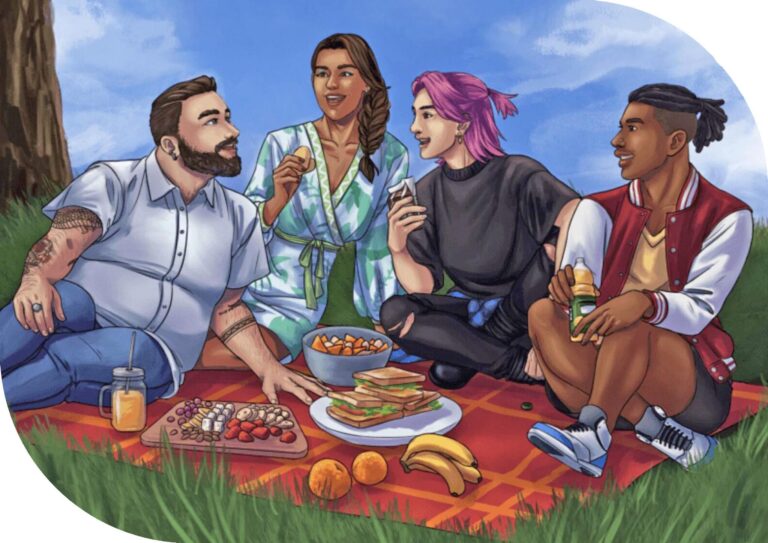
Welcome! This resource is for family, friends, and communities of men who date trans women or trans feminine people* who want to be respectful allies. We want to help you understand the issues impacting the relationships between trans women and men – and empower you to meaningfully challenge the social attitudes that harm us.
Summary
- Trans women and men have a right to healthy relationships.
- Some people may have negative views about trans women and their partners.
- This can lead to men feeling ashamed about their relationships or feelings towards trans women.
- Shame can contribute to some men behaving disrespectfully, or being violent towards trans women.
- Every person has a role to play in ending men’s violence against trans
women. Talk to the people in your life and let them know you are supportive of trans women.
Understanding the relationships between trans women and men
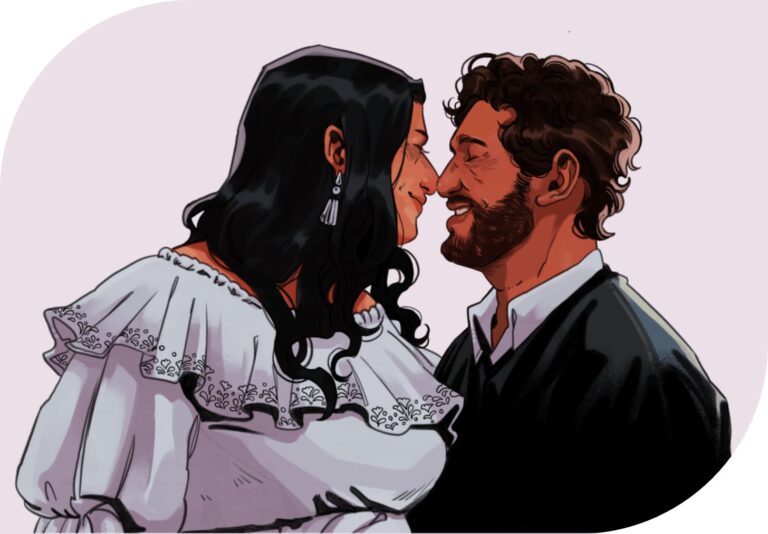
“I recently got married to my partner. I feel so happy! He makes me feel so beautiful. He’s a very kind and understanding man. I couldn’t legally get married in Malaysia but I can here in Australia. As a transgender woman, it was important to me to get married to feel secure and stronger in our relationship. On our wedding day, all our friends and family came along. We celebrated with a full heart.” – Sanu
“Ideally, I would like to have a partner in my life, though it doesn’t necessarily have to be marriage. I want that person to embrace me for who I am. We all have the right to be safe and respected.” – KatrinaUnfortunately, some people have negative views about trans women and their partners. This means these relationships aren’t always as visible or celebrated as other relationships. For example, you may not have seen many happy relationships between men and trans women shown on television, in films, or within your community, family, and friendship groups.
“I don’t think my family would be accepting if my girlfriend was trans.” – DavidAs a result, many men feel ashamed, isolated, unsafe, or nervous about their relationships and desires. Sometimes this can lead to men being secretive about their relationships with trans women.
“I was anxious, worried about people knowing—and not once did I ever think I was going to tell anyone.” – Mark
The support of family and friends is important for any relationship. Some men may assume that their friends and family won’t be supportive, even if that may not be the case.
However, when men’s family and friends are unsupportive or disrespectful about their relationships with trans women, it can have very negative impacts. Some men may distance themselves from their family and friends and feel sad or alone. Others may choose to leave their partner, or they may blame their partner for these experiences and be disrespectful or violent.
Everyone has a role to play in supporting healthy relationships between men and trans women – even if you don’t think you know anyone in these relationships.
Tip: Find opportunities to voice your support for trans women and say that all women, including trans women, deserve respect. This sends a positive message that trans women are welcome in your family, your community or your workplace.
For example, you might say:
“I want to let you know I will welcome and support your partners regardless of their gender or whether they are cisgender or transgender. What’s important to me is that you love each other and treat each other with respect.”
“I’ve seen a lot of discussion about trans women in the media and I don’t think it’s OK to debate their right to exist or be safe. All women, including trans women, should be respected.”
Likewise, ‘harmless’ jokes or comments at the expense of trans women, or that reinforce negative attitudes about gender (including appearance, interests, roles in society) can contribute to very real harm.
Learning more can help you be an informed ally. Read more information for family, friends, and community below, or download our tip sheets.
Tip sheets for family & friends:
* “Men” in this resource refers to cisgender men. “Trans women” refers to trans women, trans feminine people, women who have a trans and gender diverse history or experience, but do not identify as transgender – and other trans feminine culturally-specific identities such as Sistergirls, Fa’afafine and Kinner.