
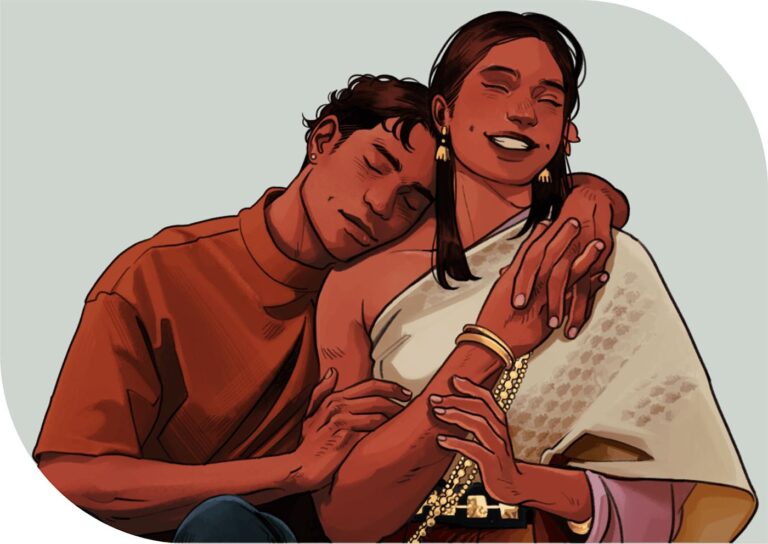
This tip sheet is for the friends and family of men who date trans women or trans feminine people*, to help them understand harmful gender stereotypes and beauty myths.
Summary
- No woman, including trans women, should be reduced to merely her appearance.
- Beauty standards affect all women, and they have a particularly strong impact on trans women.
- Trans women can feel pressured to look very feminine.
- Making negative comments about trans women’s appearance is harmful.
- Challenge harmful beauty myths or stereotypes when you hear them.
- Support trans women regardless of their gender presentation or expression.
Trans women are beautiful however they choose to express their gender identity. There is not one way to be feminine, or to be a woman. Nor does beauty equate to femininity or to worth.
Society’s beauty standards affect all women, and this is further amplified for trans women. There can be so much pressure for trans women to present as hyper-feminine. An example of this is the expectation that all trans women should look like cisgender women, or have a feminine appearance, e.g. always wear dresses and make-up.
“My voice doesn’t sound very feminine, but I don’t care. I am who I am, and this is how I speak.” – Katrina
Commenting on appearances
Kindness, empathy and courtesy can go a long way in creating safe and respectful communities and families, and is helpful when meeting new people. Being judgmental by saying cruel things reflects poorly on those saying them, and can cause harm.
Making comments about people’s bodies, mannerisms, voices or gender presentation can be really hurtful and disrespectful. People often criticise trans women by comparing them to society’s expectation of how women should present. Sadly, this is common in our society and many trans women have reported that this has been used as a tool of abuse by their partner, his family or friends.
Some people may do this because of their own insecurities, whilst others may use this as a tactic to gain power and control or to undermine relationships that they don’t accept or understand.
“His family and friends just kept making snide comments to him that I didn’t look like a real (cis) woman. Always subtly critiquing how I dressed, or acted or the sound of my voice. It just drove a real wedge between us, they just continually shamed him for being with me. Now he just wants to be friends, I just hope they realise how cruel they were. I hope one day they reflect upon the harm they’ve caused because I deserve to be loved and they took that from me.” – Electra
Passing
When meeting trans women you may or may not be able to tell that they have a transgender experience by their external appearance, their voice or their mannerisms. This is often referred to as passing. It’s a complex idea that affects every trans woman in some way. Some trans women want to pass, others don’t want to, and others want to but don’t have access to the resources to do so.
Ultimately the idea that trans women should or must pass, re-enforces the harmful idea that all women should look a certain way in order to be accepted and respected. We are all beautiful in our own unique way, and passing does not determine womanhood or femininity.
“There’s been many times in my life where the men I’ve been dating haven’t wanted to be seen with me in public especially because I don’t pass. It’s obvious I’m a trans woman. But I try not to take on their projections. It’s their own insecurities, not mine, because I know I’m naturally beautiful in my own way.” – Candy
If you expect any woman or feminine person to look or act a certain way, it is worth taking some time to think about why. Where did those ideas come from? Are they just stereotypes?
“I wouldn’t want anyone to feel pressure to live up to any kind of beauty standard because that’s not what matters to me.” – James
Tip: Avoid commenting on other people’s appearance or femininity. Wait until you have been asked before offering beauty, fashion, make-up or hairdressing tips.
If you hear someone else making inappropriate comments about a trans woman’s appearance, ask them to reflect upon why they feel it is necessary to do so.
For example, you might say:
“I don’t think it’s appropriate or necessary to comment on any woman’s appearance. I don’t understand what you’re trying to achieve.”
“All women, trans and cis, live in judgement from every direction, even from our own selves. The world insists that we are not enough. We don’t wear enough make up, we wear too much, we’re too fat, too old, too masculine, too brown, our hair isn’t shiny enough. I want to be seen for who I am, not what I look like. And I think trans women deserve the same.” – Penelope, cisgender woman.
If you need further advice on how to respond to discrimination or need some emotional support and you’re in Australia, visit our supports page.
Tip sheets for family & friends:
* “Men” in this resource refers to cisgender men. “Trans women” refers to trans women, trans feminine people, women who have a trans and gender diverse history or experience, but do not identify as transgender – and other trans feminine culturally-specific identities such as Sistergirls, Fa’afafine and Kinner.